
One of the questions that comes up a lot, especially when family members are calling through for their parents, is whether a lift can actually fit in the space they have.
Most of the time, the concern is pretty simple:
“We think Mum or Dad needs a lift, but we don’t know where it would go.”
That is a normal starting point. A lot of people do not really know what is possible until someone looks at the home properly. Sometimes it is the parents themselves calling. Quite often, it is the children helping get the ball rolling, and their main questions are usually around cost and whether a lift can fit in the space.
The honest answer is that it depends on the job, but there are more options than people often realise.
The Space Usually Decides The Lift
When someone calls through asking about a home lift, the first thing to understand is the space.
It is not just a matter of saying, “Yes, any lift will fit.” The lift has to suit the home, the number of levels, the door openings, the size available and what the customer actually needs it for.
Some homes have a clear area where a lift can go. Others are tighter. Some people are working with an existing stair void. Some are looking at an external option. Some want the lift to be part of the design of the home, while others just want safe, practical access between floors.
That is why the early conversation is more about working out what is possible than pushing one product.
Tight Space Does Not Always Mean No Lift
A tight space does not automatically mean a home lift is off the table.
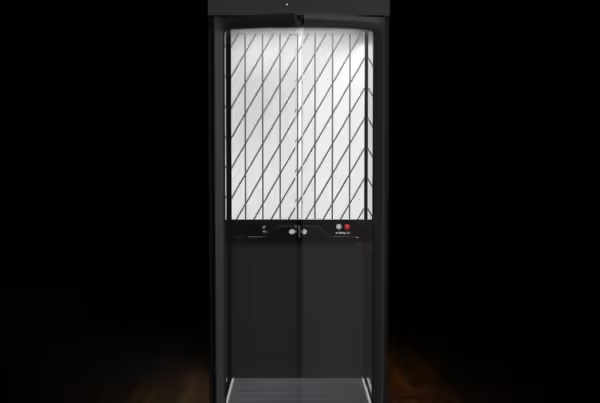
In some homes, especially where there is an existing stair void, a compact platform lift can be a good option because it helps maximise the lift size within a smaller area. With the right product, you can sometimes achieve a much better outcome in a tight space than people expect.
That is usually the key with smaller spaces. You are not just asking, “Can a lift fit?” You are asking, “What type of lift gives us the best result in this space?”
Sometimes that means a compact lift. Sometimes it means a different door configuration. Sometimes it means steering away from a lift type that would take up too much room.
Why Door Type Matters So Much
Doors can make a big difference to whether a lift works in a space.
If you only have a small area and want a sliding door lift, that may not be the best option. Sliding doors can take up extra room, which can make a tight space even tighter. In those situations, a swing door product may make more sense.
With some compact lift products, there are different door configurations. You may be able to use a single leaf swing door, automatic operators, or bi-parting swing doors that open from the middle. The bi-parting doors can be useful in tight corridors because the leaf size is halved, so the doors do not need as much swing space.
That is the sort of thing customers usually would not know before they call. They just know they have limited space. The door setup is often one of the details that decides what is actually practical.
Real Example: A Lift Inside A Penthouse Stair Void
A good example is a three-storey penthouse on Marine Parade, Labrador.
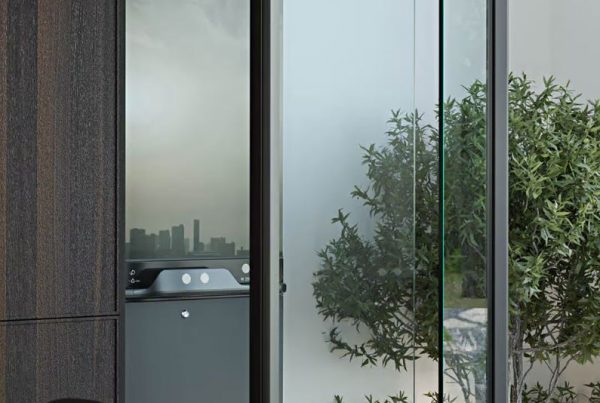
The client needed access to the second level of the penthouse, where the main living area was located. An Aritco Compact was chosen because it was the lift that would fit within the existing stair void.
There were a few challenges. It was a penthouse, so getting the lift components up there was part of the job. Everything had to be broken down into sections and moved through the main lift. The finished lift also needed to suit the look of the apartment, so the shaft was essentially glass to maintain the Broadwater views.
The benefit was simple: the client gained unhindered access to all levels of the penthouse, and the lift did not detract from the look of the home.
That is a good example of why it is worth asking the question before assuming a lift will not fit.
Their Neighbours Loved it and Installed A Lift
Axis Lifts also completed another Aritco Compact installation at the Grand Hotel apartments on Marine Parade, Labrador.
That one was also, inside the penthouse stairwell, with the staircase wrapping around the lift. The customer had seen the neighbour’s lift and was very happy with it. Because the space was limited, there was not much else that would fit, but the lift fitted perfectly within the stairs.
The shaft was predominantly glass, with a special black colour option. Glass made sense because of the Broadwater views. When travelling up in the lift, the customer could see across to South Stradbroke Island.
That is the other side of fitting a lift into an existing home. It is not just about squeezing something in. It is about making it work with the space, the access need and the look of the home.
The Lift Has To Suit How You Will Use It
The other thing to think about is how the lift will actually be used.
If the lift is mainly for ageing in place, the customer may just need safe and easy access between levels. If it is for wheelchair access, then the size and entry points matter more. If it is for everyday living, it needs to be practical enough for normal use, whether that is getting upstairs, carrying groceries, or moving around the home more comfortably.
The smaller the area, the more important it is to maximise the available space. But it still needs to be useful. There is no point installing a lift that technically fits if it does not give the customer enough room for what they actually need to do.
That is why it is worth having the conversation properly.
So, Can A Home Lift Fit In Your Existing House?
In a lot of cases, yes, there may be an option. But it depends on the house.
A tight space, stair void or existing home layout does not automatically rule out a lift. It just means the product, size, door setup and position need to be looked at properly.
Sometimes the right solution is a compact lift. Sometimes it is a platform lift. Sometimes it is a different door configuration. Sometimes the best advice is that the lift the customer first had in mind is not the one that will give them the best result.
The starting point is simple: show us the space, tell us what you need the lift to do, and we can help work out what is actually possible.